Sleaford Mods: more inspiring than a LinkedIn post
These articles were originally written in French, then translated using AI.
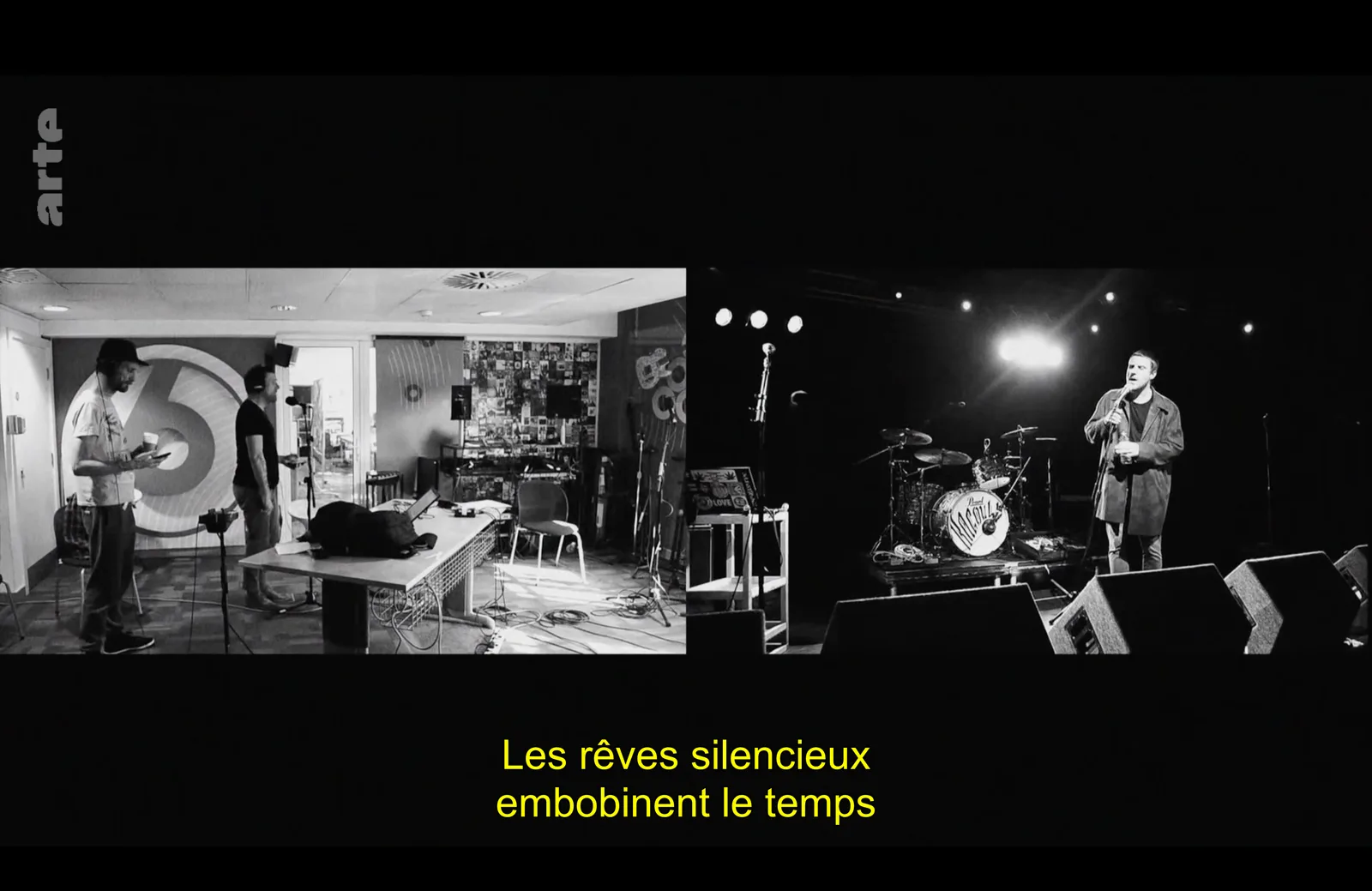
You will say I am pushing it if I see professional lessons and personal growth in Sleaford Mods. And you will be somewhat right.
I stumbled on this documentary while browsing the Arte app. It was the second time I had seen the film. I remember back then (2017?) it aired right after an episode of Tracks (ah, Friday nights zoning on Arte until 2 a.m.... tear in the eye). Anyway, there were these two English guys in a scruffy rehearsal room, spitting horrors over minimalist music from an old laptop, and I was fascinated.
Not so much by the music itself. Hard to truly enjoy Sleaford Mods without subtitles. It is not very pleasant; listening you understand nothing of what he says, yet you are fascinated by the characters, especially live.
Fascinated by Jason Williamson first and foremost. His verve, his flow, his style that jumps off the screen. Sleaford Mods is him first. By Andrew Fearn too, who barely shuffles on stage behind his battered laptop on a chair, a can in hand. And a third character you only see in this documentary: the greying first manager / bus driver, his vinyl collection in a maid's room, labels he sticks by hand and records he mails. We all see a bit of ourselves in him. He seems nice; he is living a bit of his dream. For me he is the hidden star of this documentary.
The pitch
It starts at the bottom of the ladder, or nearly, in pubs in front of four people, then it climbs, rooms grow, crowds too, up to Glastonbury, the BBC, and features with Iggy Pop.
The story of the band's rise from grey Nottingham suburbs to chart peaks, seaside festivals, and even Coachella. A very classic ascent until then, except not really.
Because Sleaford Mods are far from Britpop cliché, even if Jason Williamson wears the fringe and dresses Mod. Something peculiar at the edge of punk, electro, spoken word, but not really any of those either.
As said, it is not super pleasant to listen to: rough, not very melodic, hard stories in slang, everything you are told not to do if you want to succeed.
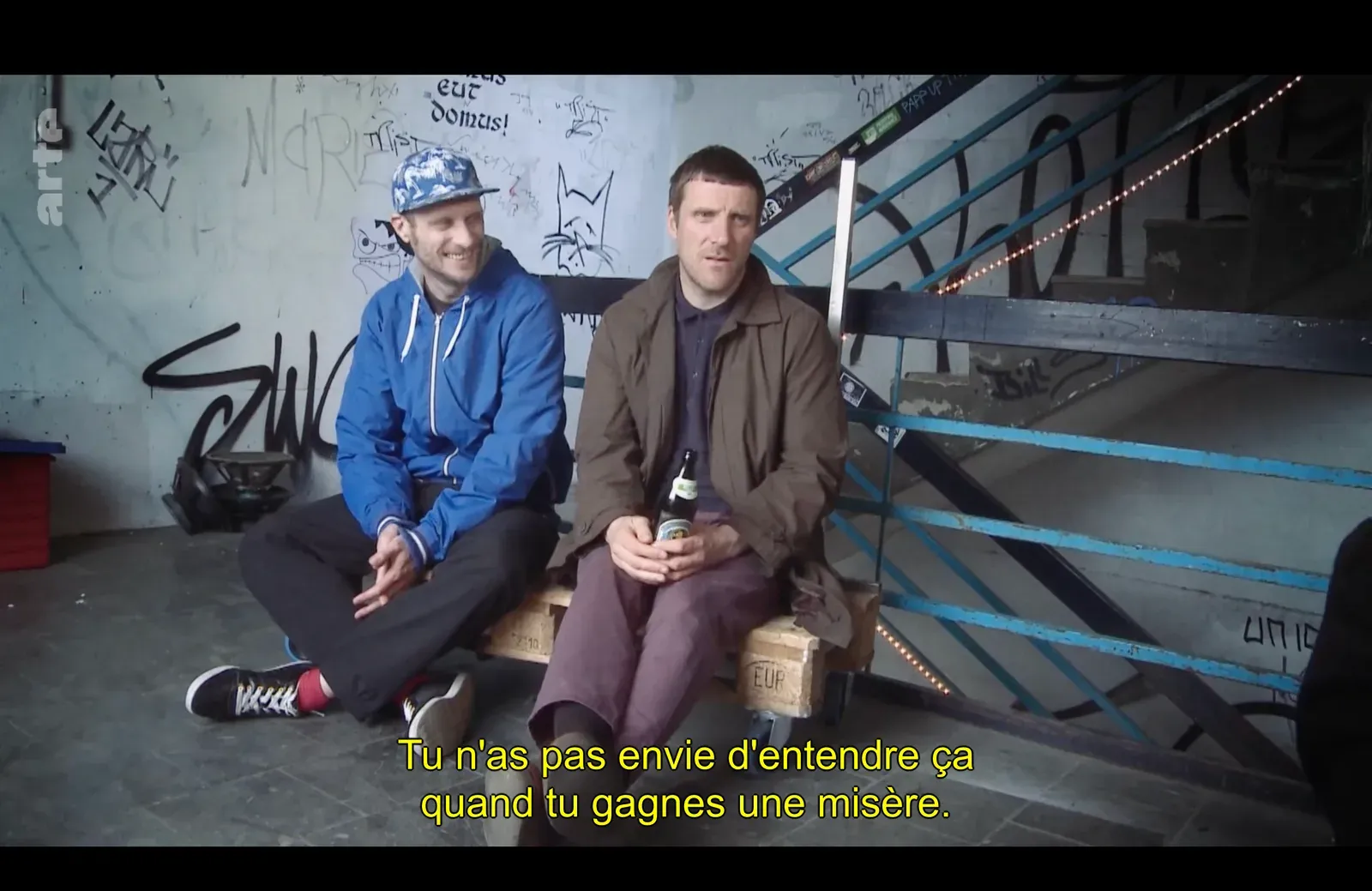
Lesson 1: it is never too late to start
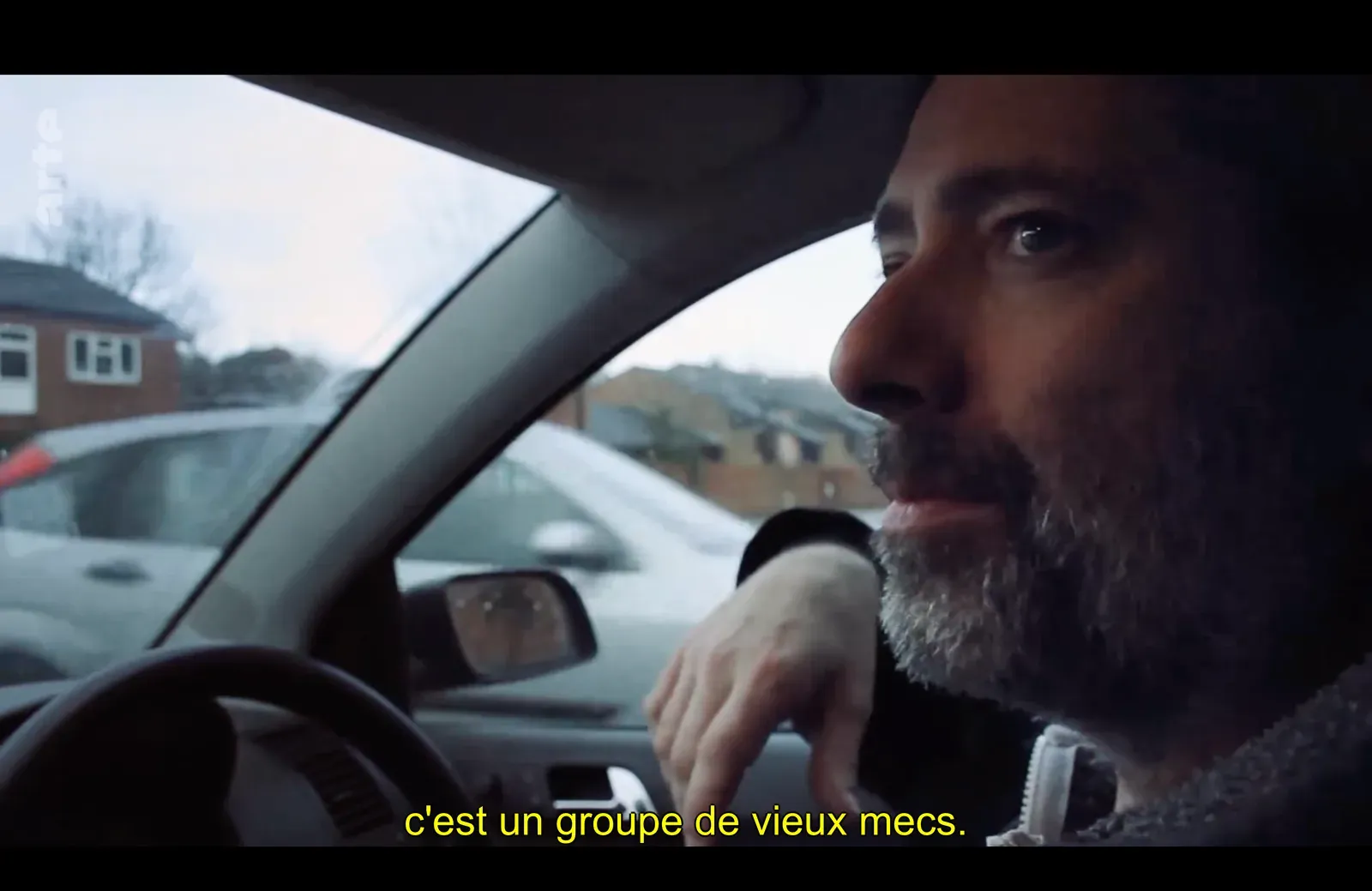
The most important lesson is surely: you can start a successful music career at forty.
Often in music, forty-somethings are just part of the scenery and settle in. Or they come back strong after semi-retirement and their 90s/2000s bands take festival poster spots from the youngsters. But rare are those who start their career already grey and with a belly. Sleaford Mods did it and it feels great.
Lesson 2: be yourself
What appealed was the unfiltered discourse and identification with their audience. Jason Williamson is their voice. Insults fly, punk poetry par excellence, about work, petty bosses, dead-end worlds.
Again, familiar ground. For the crowd it feels good, cathartic. You cannot get that liberation of speech and energy about work on LinkedIn.
I said Williamson is the voice of his audience, but it is more than that cliché. Because we could never do what he does: we do not have the swagger, diction, energy, poetry, humour of this guy with his trench, plastic bag, and beer can.
Lesson 3: the existential paradox of a successful punk band
You still sense the end of one chapter and the start of another when success arrives.
We followed with humour the pub tour of England in a Ford Corsa. We loved seeing the manager quit his bus driver job to start a music industry career at fifty. We saw him stick labels by hand on vinyl, one of the last times he would do that, since SPOILER ALERT (not really), the band will sign to a big label. So the group swaps the Ford Corsa for a HUUUUGE bus.
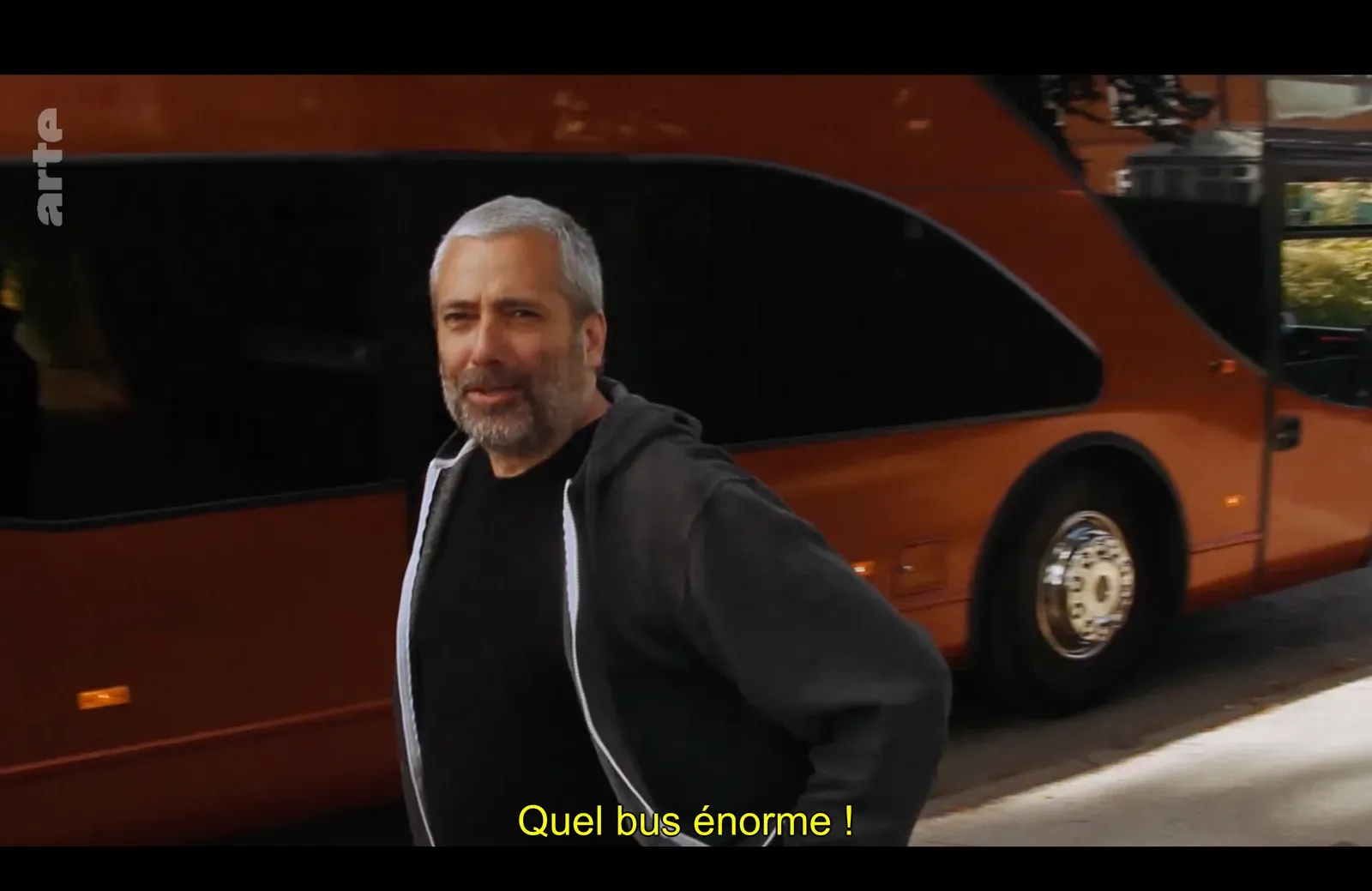
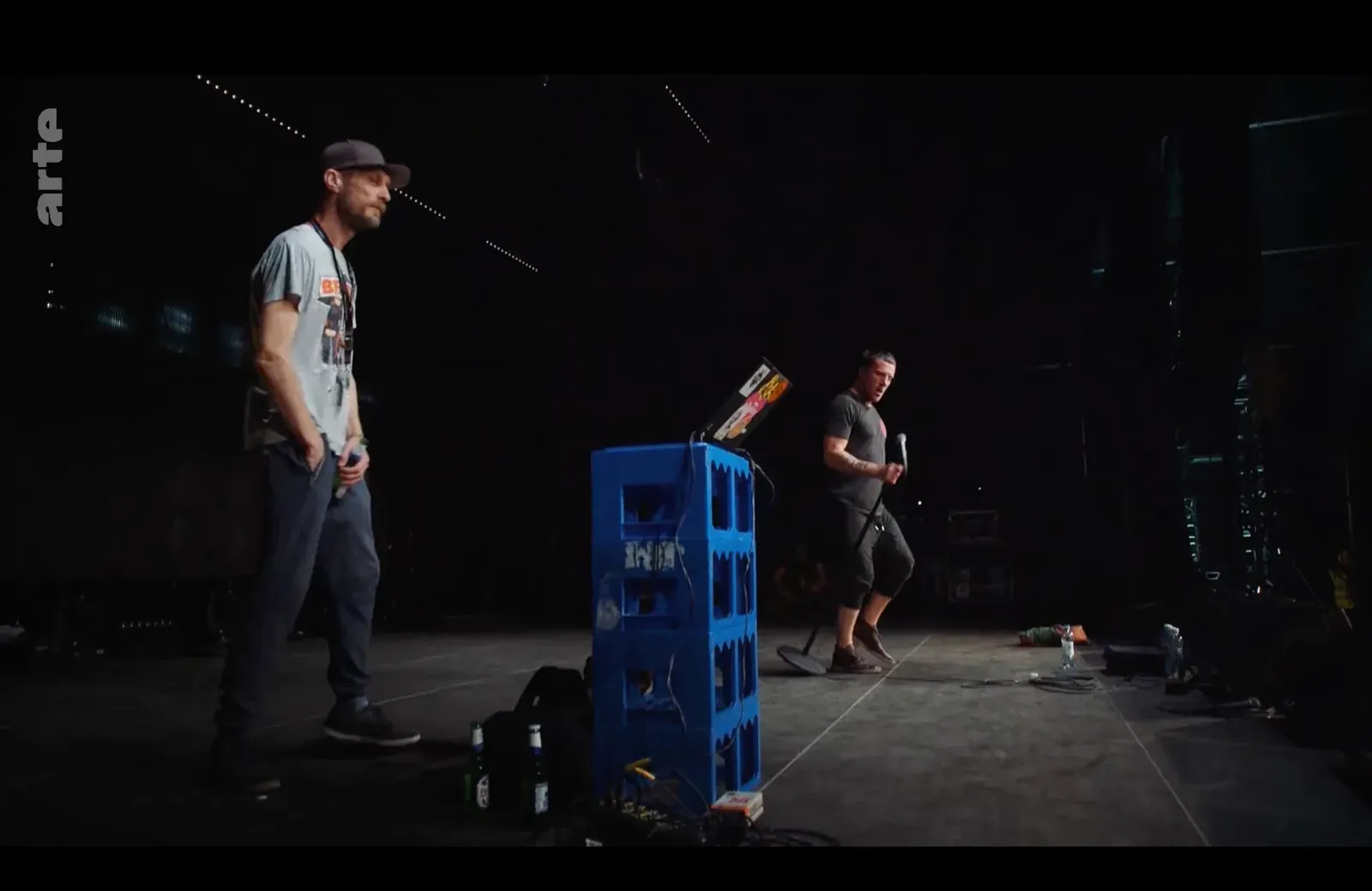
And then what made the Sleaford Mods "formula" charming, the cheap beat boxes and setup (a beer crate for the laptop, a mic, 1-2-1-2 let's go), already seems a bit at risk. The imagery on one hand, and the discourse too (social critique). Can they keep talking about grey suburbs, bus stops, job centres, or petty bosses when everything has exploded?
Honestly it has kept going well for them since 2017; no need to worry too much. The recipe has not changed much, the discourse probably a little. Their day-to-day for sure.
But I leave this documentary in the same state as the first time. Ultra motivated, full of force, the opposite of a depressing scroll on social media. 👇